


The Poetry of Horses

Updated:
May 29, 2026By Li Robbins
The field was empty
except for the horse —
head low, tail soft as grass,
one hoof resting
like a thought half-formed.
- From When The Horse Stood Still, by Dr. Stephen Peters
It might come as a surprise to learn that a neuroscientist also writes poetry — about horses no less — but it’s a natural creative step for Dr. Stephen Peters. He strives to bridge the gap between science and horsemanship throughout his work, and his first poetry collection, The Book of Neuropoetry (2025), is just the latest step in that direction. While the word “neuropoetry” itself may not seem very poetic, in the hands of Peters it’s a way of writing about neuroscientific phenomena that expresses “a shared language of horses, nervous systems, science, and soul.” In other words, Peters explores states like fear, memory, and learning in his poems, all of which play an important role in the lives of horses.
Peters, who as a scientist has dissected brains and studied neurotransmitters, sees the poems not as a departure from science but as a “natural complement.” He does provide “clinical postscripts” following some of the poems, and they explain the underlying science — helpful for anyone curious about the workings of equine and human brains. Readers who are not scientifically inclined may nonetheless be charmed by how the poems reflect the “connected similarities between human-ness and horse-ness,” as one online reviewer put it.
Of course, poems about or inspired by horses have been written for centuries, and although the language used has evolved over time, there are some themes that just seem to stick — for instance, the power, beauty, and mystery of horses. What follows is a bit of a roundup of some notable poems on these and other themes commonly found in equine-connected poetry.
Related: Horse Museum Bucket List
THE SPEED OF STEEDS
Away, away, my steed and I,
Upon the pinions of the wind.
All human dwellings left behind,
We sped like meteors through the sky…
-From Mazeppa, by Lord Byron
Flight enters into many a poem about horses, likely because it so easily lends itself as a symbol of freedom. Plus, a long journey on a fast horse makes for exciting poetry! Take Lord Byron’s 1819 poem Mazeppa, inspired by 17th-century Ukrainian military leader Ivan Mazepa. Legend (considered historically unfounded) has it that the discovery of Mazepa’s affair with a count’s wife led to Mazepa being tied (naked, no less) to a wild horse who galloped for two days across Eastern Europe. Since horses in romantic literature sometimes symbolized luck and fate, you might say Mazepa’s luck had run out. The horse’s, too, for although he “looked as though the speed of thought were in his limbs” and “was wild, wild as the wild deer and untaught,” the horse did not survive the journey.

Currier and Ives illustration, circa 1846, of Ivan Mazeppa’s fate, based on Lord Byron’s poem. Source: Library of Congress
On the flip side, the beauty of horses when they aren’t running has also provided subject matter for poets. In Ted Hughes’ 1957 poem The Horses, a man stumbles upon a horse herd in “the hour-before-dawn dark” who are “megalith-still…with draped manes and tilted hind hooves.” As the sun comes up, the horses (“grey silent fragments of a grey silent world”) begin to glisten in the light, and yet they remain very still (“no one snorted or stamped”). Literary analysis of The Horses may tell you that the horses represent the timelessness of nature and its contrast to the “din of the crowded streets” mentioned later in the poem. No doubt true, but it’s safe to say that The Horses is also about the power and beauty of horses when not in flight.
Related: The Enduring Art of Bridle Horse Training: From Spanish Cowboys to Today’s Horsemen
HOW TO DESCRIBE A HORSE
I am roguish – I am flighty – I am inbred – I am lowly.
I’m a nightmare – I am wild – I am the horse.
-From Equus Caballus, by Joel Nelson
Poets sometimes try to describe either the nature of horses in general or that of a specific horse through their work, and cowboy poet Joel Nelson’s Equus Caballus paints quite a picture of the former. Cowboy poetry excels at giving readers a window into horse behaviour — for although there’s no agreed-upon definition of “cowboy poetry,” some of the finest examples naturally feature horses. One famous horse-centric cowboy poem is Curley Fletcher’s The Strawberry Roan, both a song and a poem (first published as The Outlaw Broncho in 1915), which describes the aforementioned roan as “his legs is all spavined, he’s got pigeon toes, little pig eyes and a long Roman nose.”
The strawberry roan does not sound like the most attractive beast, but the horse in General Fang’s Steed, a poem by eighth-century Chinese poet Du Fu, sounds breathtaking, with “two ears sharp as bamboo spikes” and “four hooves light as though born of the wind.” The horse in a fifteenth-century poem by Welsh bard Guto’r Glyn, who has a mane like “the eaves of a house or the tip of a wave,” also holds more appeal than the roan, as does Barberry, the subject of twentieth-century poet Hilda Conkling’s poem of the same name. Barberry is a positively gorgeous creature whom the poet imagines as “russet red” with a “flying mane” and as “strong and wiry, his head slender and haughty!”
Sometimes poetic efforts to convey the look of a horse are not so literal, as Kate Barnes’ poem A Mare shows. The mare in question is described as being “the summer queen and the sun-bodied light of winter.” Barnes also wrote a poem called In The Pasture, in which a mare is described as having a “Titian-blond mane” that hangs down like “the ringletted chevelure of a Victorian belle, innocent and alluring.”
WHEN HORSE AND HUMAN BECOME ONE
I like their lady horse swagger,
after winning. Ears up, girls, ears up!
But mainly, let’s be honest, I like
that they’re ladies. As if this big
dangerous animal is also a part of me…
-From How to Triumph Like a Girl by Ada Limón
Sometimes the division between a horse and a human can blur a little, creating the feeling that your horse is somehow a part of you. Poets may take this sense of blended identity even further, as two-time US Poet Laureate Ada Limón does in How to Triumph Like a Girl. It’s about a racehorse, but given the poem’s title — and lines like “as if this big dangerous animal is also part of me” — it seems likely it’s also a way of getting at the power of women.

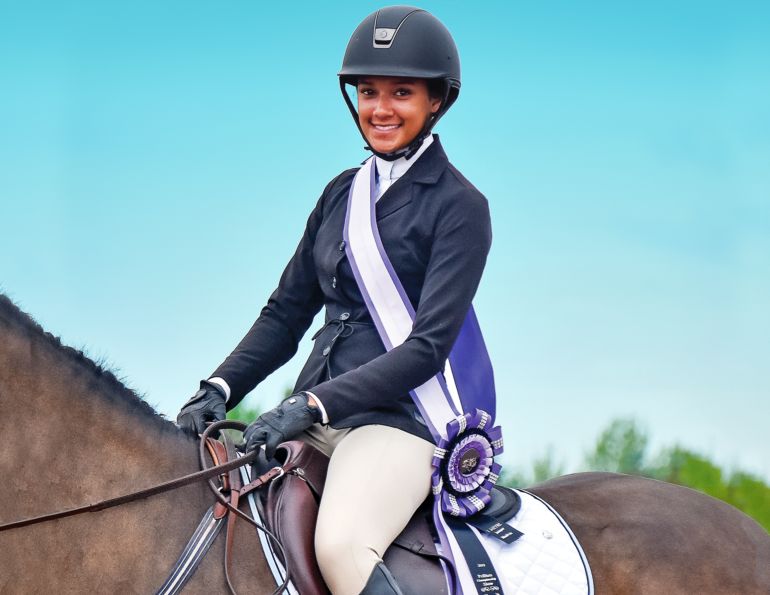
Photo: iStock/Callipso
That said, Limón was once asked by an interviewer why so many of her poems feature horses, and her answer included the following: “I think horses for me have this spiritual strength in them that always stuns me. They are so powerful and gorgeous and capable. I admire them so deeply… For me, horses (and all animals really) symbolize the unknown, the deep wordless power of being…”
Sometimes, poems that explore the line between human and horse can take a whimsical turn. Ezra D. Feldman’s A Progression of Scents opens with the lines, “Woke up one day as a horse. Never suspected it.” Or take Mark Strand’s poem, Two Horses, which describes a man getting on all fours to drink from a lake “like an animal.” Two horses join him and begin to drink too, eyeing him and snorting. He snorts back, which makes the horses move away, and he wonders why, speculating that the horses may have known him in another life — the one in which he was a poet. “They might have even read my poems…”
Related: Rediscovering Equestrian Sports from Long Ago
THE NATURAL WORLD
Horses make a landscape look more beautiful.
- Lame Deer
Lame Deer, a prominent Indigenous figure of the 20th century, sometimes described as a “storyteller, rebel, and medicine man,” was not a poet. Even so, that one line (“Horses make a landscape look more beautiful”) from his autobiography, Lame Deer: Seeker of Visions, became the title of a famous book of poetry by Alice Walker, author of The Colour Purple. What’s more, Lame Deer was correct — the sight of horses in nature truly can be breathtaking. So, it’s not surprising that horses frequently figure in poems connected to the natural world.
Take the poetry of Robert Frost, for example. Not just the “little horse” in the famous Stopping by Woods on a Snowy Evening, but also the colt in The Runaway, a poem that describes the confusion of a young Morgan colt in a mountain pasture as snow begins to fall. As you read the poem, you can practically hear the “miniature thunder” when the colt startles and runs, and see him, or think you do, “dim and grey, like a shadow against the curtain of falling flakes.” To read The Runaway is to be transported to rural New England.

Photo: iStock/Wanderluster
The loss of horses and their ability to connect us to the natural world is nicely captured in R.T. Smith’s poem, Horse, where a mischievous boy sitting at a desk, away from the fields he’s grown to love, carves a drawing of a horse into that desk. The poet describes this urge to capture the image of a horse as “a desire as old as cave art.” It’s a way of remembering both fields and horse, or, as Smith writes, an attempt to “make beauty local, to bring something graceful into the language of home.”
DEMYSTIFYING HORSES
“I’m horse,” he said, “that’s what!”
And then he shut his eyes again.
As still as they had been before.
He said for me to run along
And not to bother him any more.
-From Horse, by Elizabeth Madox Roberts
Novelists sometimes try to imagine what it would be like to be a horse, none more famous than Anna Sewell, author of Black Beauty. Elizabeth Madox Roberts, a Kentucky writer well known in the early half of the twentieth century for both her novels and poetry, took a different approach when imagining the inner thoughts of a horse in the charming 1922 poem Horse. In it, a sleepy horse opens his eyes and begins “to talk,” not with “words or noise,” but with his body. (As Roberts writes, “the talk was there along his nose.”)
“He said the day was hot and slow,
And he said he didn’t like the flies;
They made him have to shake his skin,
And they got drowned in his eyes.”
Demystifying horses in poetry can extend to riding itself. In Nathalie Handal’s poem, Love and Strange Horses—Intima, she describes a first ride on a horse as finding “the music of fire, crackling in the wind,” but one that left the rider with a burn on the side of her leg. Poet Linda McCarriston also gets into the nitty-gritty of the challenges of riding in her poem, On Horseback. It describes a woman riding a scrappy little horse whose body is “bent and dented,” and whose mane is “short and scraggly.” “Nothing is flying, transporting, transcendent,” writes McCarriston, “we aren’t a metaphor for anything.” As wonderful as it can be reading about beautiful horses soaring across the earth, there’s also something compelling about such blunt, non-romanticized descriptions of horses in poetry. For, to quote American poet Jaswinder Bolinda from Portrait of the Horse, “sometimes the horse is simply a horse.”
Related: Horses and Marketing: Anything is Possible
HORSE POETRY ROUNDUP
- When The Horse Stood Still, by Dr. Stephen Peters (From The Book of Neuropoetry, Wasteland Press)
- Mazeppa by Lord Byron
- Equus Caballus, by Joel Nelson (from Cowboy Poetry: The Reunion Gibbs Smith)
- The Horses, by Ted Hughes (from The Hawk in the Rain, Faber and Faber)
- The Strawberry Roan, by Curly Fletcher
- General Fang’s Steed, by Du Fu (Also known as Mr. Fang: Trainer of Barbarian Cavalry Horses)
- Poem 39 by Guto’r Glyn
- Barberry, by Hilda Conkling
- A Mare, by Kate Barnes (From The New Yorker)
- In The Pasture, by Kate Barnes (from the Maine State Library)
- How to Triumph Like a Girl, by Ada Limón (from Bright Dead Things, Milkweed Editions)
- A Progression of Scents, by Ezra D. Feldman (from Poems About Horses, Penguin Random House Canada Ltd.)
- Two Horses by Mark Strand (From The New Yorker)
- The Runaway, by Robert Frost (From New Hampshire)
- Horse, by R.T. Smith (from Poetry, Poetry Foundation)
- Horse, by Elizabeth Madox Roberts (from Under the Tree, B. W. Huebsch Inc.)
- Love and Strange Horses—Intima, by Nathalie Handal (from Love and Strange Horses, University of Pittsburgh Press)
- On Horseback, by Linda McCarriston (from Poetry, Poetry Foundation)
- Portrait of the Horse, by Jaswinder Bolina (from Phantom Camera, New Issues Press)
Related: An Equestrian Palace: The Living Museum of the Horse
Related: Saddlery - Old Profession, New Innovations
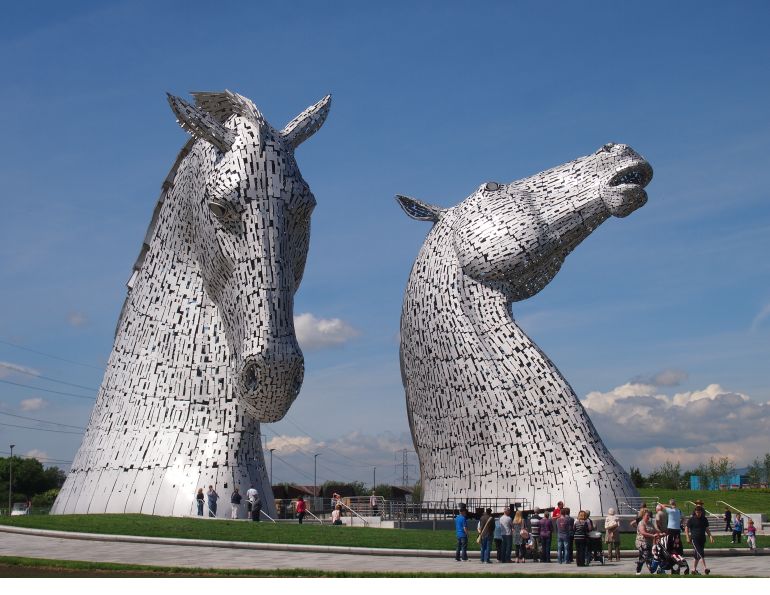
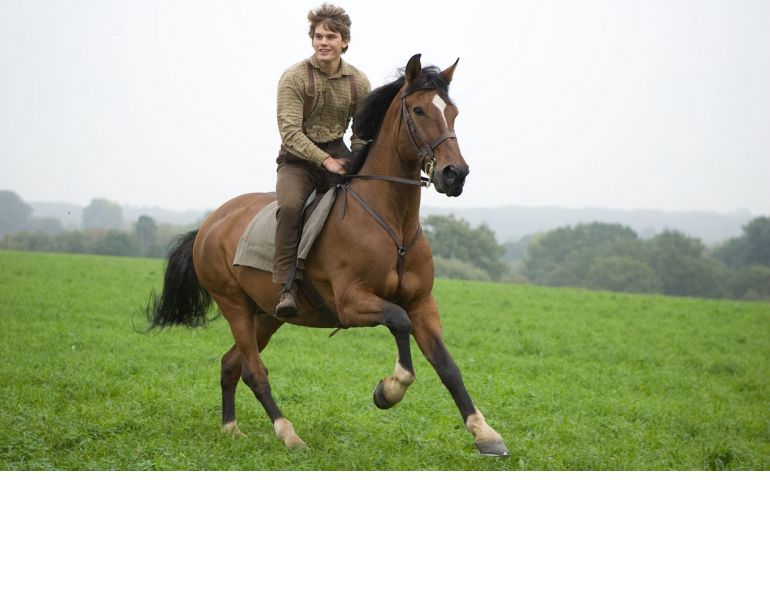
Main Photo: Dreamstime/Elisa Bistocchi
Blogs & Podcasts
Advertisement

Related Articles

Advertisement

Featured Stories




Advertisement
