John Ware: The Cowboy Who Helped Build Alberta

Updated:
March 4, 2026By Kate Kotula
John Ware is a legend in Alberta as a black cowboy who became a successful rancher despite racism. He will always be remembered for his excellent horsemanship skills, farming techniques, and strength. Becoming a rancher was not as easy for him as it was for others. His story is one of grit, skill, and breaking barriers in a place where the land was as tough as the people.
From Slavery to the Saddle
Ware was born enslaved around 1845 in South Carolina. His great knowledge as a rancher suggests he worked with horses while enslaved. Life didn’t start easy for him, but at the age of 20, his life changed when slavery was abolished in 1865. He found himself a free man and made his way west to Texas. There he learned the art of ranching — roping cattle, breaking horses, and riding as if he were born in the saddle.
He became an experienced ranch hand by the early 1870s, herding cattle from Texas to distant ranges in Montana. Once in Montana, he was hired to drive 3,000 head of cattle to Sir Hugh Allan’s North-West Cattle Company located in Millarville, Alberta.
Building His Own Life
Ware started building his own cattle brand and registered it in 1885. It was known as the “four-nines” (9999). He then established his ranch near Millarville by Sheep River. Ware met Mildred Lewis in 1891 and they married in 1892. When more settlers arrived in the area, they moved to a new ranch located along the Red Deer River by Brooks, Alberta.
Related: Sergeant Reckless: A True Hero and Inspiration
A Cowboy Like No Other
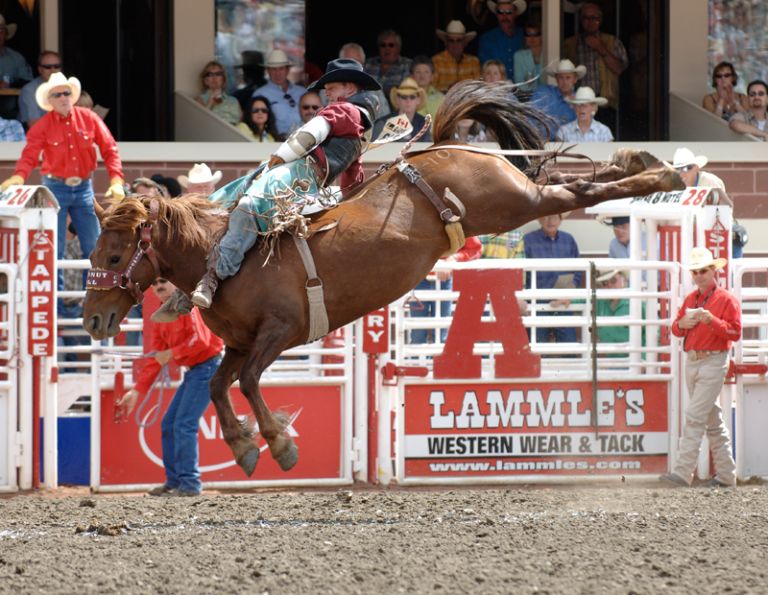
Ware was one of the best-known horsemen around, able to break the wildest of broncs easily. But it wasn’t just his strength or skill that made him stand out; it was his kindness and work ethic.
People respected him. In a time when black people faced discrimination, Ware earned the admiration of white and Indigenous communities. He worked hard, built a successful ranch, and eventually started a family with his wife, Mildred Lewis. He was proof that, no matter where you started in life, you could carve out something incredible.
Gone Too Soon
In 1905, tragedy struck. While riding, Ware’s horse tripped in a gopher hole. The fall killed him. His funeral was one of the largest in Calgary. It attracted people of all backgrounds who came to pay their respects. That alone tells you about the kind of man he was.
Today, John Ware’s legacy is still alive. Alberta has multiple places named after him, including Mount Ware, Ware Creek, John Ware Junior High, and the John Ware Building. He was a black cowboy who helped shape Canada’s ranching history.
Why John Ware Matters Today
John Ware’s life is a reminder that history isn’t just about politicians and generals. It is about the everyday people who built the world we live in. He broke barriers without making a fuss about it, proving that skill, determination, and character can overcome even the toughest obstacles.
He didn’t intend to be a legend; he just wanted to work hard and build a life for himself. But in doing so, he became one. Ranching as we know it today would not be the same without John Ware.
Related: Unhorsed: Dismounting Anti-Black Racism in Horse Racing
Related: Sam Steele’s Legend Rides On
Watch: John Ware: Legendary Black Cowboy | Strong and Free
Historica Canada
About the Author
Kate Kotula is an Equine Science major in her first year of Animal Science Technology at Lakeland College in Vermilion, Alberta. She wrote this article on John Ware as a Grade 12 Black History Month assignment at Lord Selkirk Regional Comprehensive Secondary School in Selkirk, Manitoba, inspired by his accomplishments and the lasting legacy he built in Alberta ranching. Kate aspires to a career in training and competing with horses and enjoys light horse shows, barrel racing jackpots, and rodeos.
Related: The March West: The Birth of the RCMP 150 Years Ago
Main Photo: John and Mildred Ware with children Robert and Nettie, circa 1896. Photo: Wikimedia

Blogs & Podcasts
Advertisement

Related Articles


Advertisement

Featured Stories





Advertisement