Schooling

desensitizing horse, my horse is spooky, whole horse podcast, alexa linton, horse scared, how to disensitize horse, trauma horse, horse signals, freedom based horse training, emotional horsemanship, lockie phillips

A closer look at the troubling physiology behind this common practice and how to support curiosity and courage in our horses instead.

Horse yielding to neck rein pressure during western riding

One could say that to work with horses is to work under pressure: the physical pressure we employ in communicating to our horses, time pressure, and even peer pressure. A wise horseperson has a sense of timing and knows when it’s fitting to yield or resist.

horse won't go through gate, gate exercises horses, competitive trail competitions, working equitation, mountain trail horse, extreme cowboy tests, horse afraid gate

Essentially, a gate is a transition from here to there. It’s a transition from one pasture to another, replicated in competition. Learning to work a gate can be part of your horse’s training transition into a more attentive, patient, and handy partner.

Teresa Pitman, Prof. Michael Lindinger, University of Guelph, Equine Guelph, horse heat stress, overheating horses, horse hydration, equine hydration, horse cooling techniques, cooling horses in summer, horse sweating, electrolyte supplementation for horses, horse electrolytes, summer horse care, riding in hot weather, horse exercise safety, equine health, horse wellness, heat acclimatization in horses, preventing heat stress in horses, horse body temperature, equine physiology, horse sweating and hydration

A hot humid day. One rider. One horse. Both are exercising at a moderate level. Who is more likely to overheat? It might surprise you to learn that your horse gets hotter much faster than you and is more susceptible to the negative effects of heat stress. Prof. Michael Lindinger, an animal and exercise physiologist at the University of Guelph, explains: “It only takes 17 minutes of moderate intensity exercise in hot, humid weather to raise a horse’s temperature to dangerous levels. That’s three to ten times faster than in humans. Horses feel the heat much worse than we do.”

Rider using Equisk resistance bands on RooElla horse simulator to improve stability, posture, and equestrian biomechanics.

RooElla, the interactive horse simulator owned by Susan Cruickshank of Oakwood, Ontario, is a perfectly schooled mechanical dressage horse that is highly sensitive to its riders’ aids. During a session with Cruickshank and RooElla, riders gain instant feedback about leg pressure, seat position, and rein contact. It is the ultimate tool for helping riders be the best they can be for their horses.

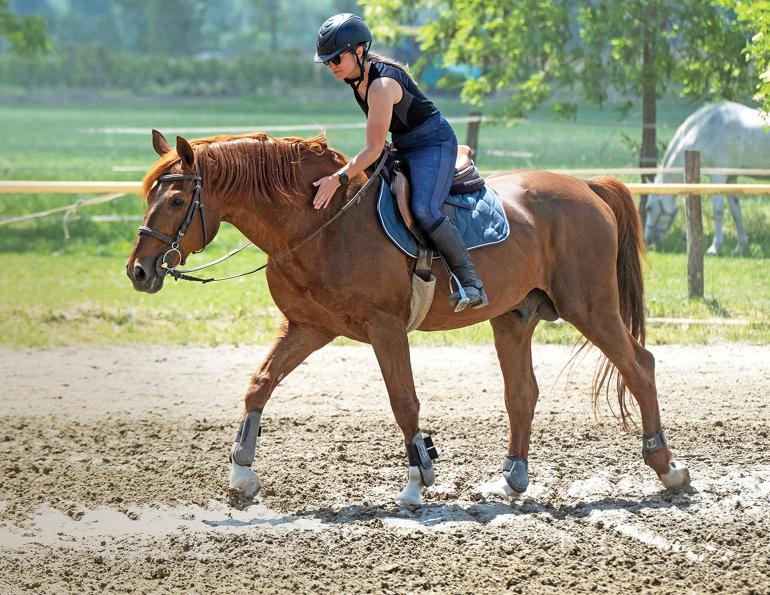
Senior horse under saddle demonstrating the benefits of consistent exercise for maintaining fitness, mobility, and soundness.

A daily anxiety for many owners of senior horses is that there may be little time left for the riding and activities they have enjoyed until now. As a horse approaches and then passes the age of 20, good rides start to feel numbered. The swayback, gait irregularities, lack of energy… these outcomes seem to be only a matter of time. And without clear reason to do so, many owners start backing off, easing the horse into retirement. Ironically, this approach usually hastens a horse’s decline instead of delaying it.

Jec A. Ballou, Is lunging a horse a good idea, Should I lunge my horse, importance of horse lunging, when to lunge horse, how long should I lunge my horse? Horse lunging tips, horse lunging hacks, what surface should I lunge horse on?, importance of sloped terrain while horse lunging

To lunge or not to lunge? Numerous riders grapple with this question, weighing the potential deleterious physical impacts with the exercise value for non-ridden horses. Whether lunging is good or bad turns out to have a nuanced answer. A more practical inquiry might not be whether to lunge, but how and when to lunge.

horse bits, contact with horse, dull mouth horse, bit evasion, how to get a light mouthed horse, lindsay grice

Not long ago, I toured a Western art museum and found myself absorbed in the works of Russell and Remington. Their paintings, alive with movement, depicted the unforgiving life of the cowboy — scenes filled with dust, tension, and the raw energy of untamed horses. These animals, used for transport and survival, stood in stark contrast to the roles horses now occupy in our world — companions in leisure, competitors in sport, and trusted partners in training. But one detail in every piece caught my attention and left me uneasy: riders with rigid hands pulling back, and horses resisting, mouths wide in distress.

how to use hills to train horse, horse hill training, jec ballou, horse fitness, exercises for horses, best workouts for horse

Define your goals to develop a training plan - While hill training is widely accepted as important for building strength, its actual benefits rely on answering the question: What is the goal for this individual horse?

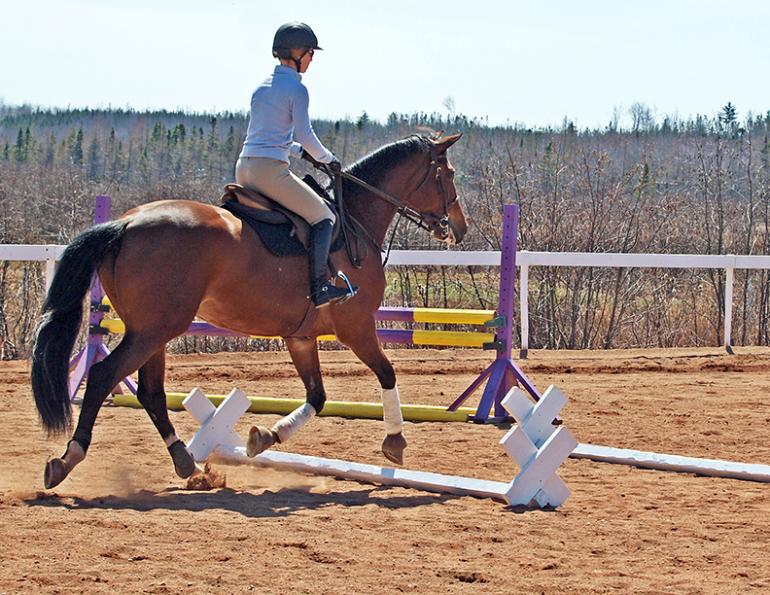
Jec A. Ballou, ground poles for horses, horse pole exercises, equine conditioning Canada, groundwork for horses, ridden pole work, horse training Canada, equine fitness, horse rehabilitation exercises, improving horse balance, horse proprioception, pole work benefits horses, Canadian horse industry

The effects of ground poles vary significantly depending on whether they are performed in-hand or under saddle, at what speed, and in what volume. When poles are broadly recommended by veterinarians and trainers for rehabilitation or conditioning, riders are often left uncertain about the specifics of using them.

Pages