Updated:
April 29, 2026Canadian equestrian sport has lost one of its defining figures with the passing of Thomas Franklin “Tom” Gayford on April 26, 2026, at the age of 97. An Olympic gold medalist, master horseman, and influential builder of the sport, Gayford’s legacy spans generations and reaches far beyond his own remarkable competitive achievements.
Born in Toronto in November 1928 into a deeply-rooted equestrian family, Gayford was immersed in horsemanship from an early age. Over a career that stretched from the late 1940s into the early 1970s, he established himself as one of Canada’s most versatile and enduring competitors, excelling in both three-day eventing and show jumping. He first represented Canada at the 1952 Olympic Games in Helsinki, a pivotal moment in equestrian history when the sport opened more fully to civilian riders and female competitors.

Thomas Gayford at the National Horse Show in New York City, 1964.
Gayford went on to represent Canada at three Olympic Games, but it was at the 1968 Mexico City Olympics that he achieved his most celebrated triumph. Riding Big Dee, and alongside teammates Jim Day and Jim Elder, Gayford helped Canada to a stunning and unexpected team gold medal in show jumping, an achievement that effectively announced Canada’s arrival on the world stage. Reflecting years later on the experience of competing before an enormous and electrified crowd, Gayford recalled: “There’s a buzz. If you ever looked up at the crowd, you were cooked, just hypnotized.” The course itself, he noted, was formidable, its challenges demanding absolute focus and resilience, with three giant jumps in a row. “That was the whole key, to come through there alive.”

In 1968, the show jumping trio of Thomas Gayford (pictured), James Day, and Jim Elder stunned the equestrian world, capturing Canada’s only gold medal at the Summer Olympics in Mexico City. It marked the first time Canada had entered a show jumping team, and few expected them to prevail against the heavily favoured Americans, Germans, and British. Photo courtesy of Olympic.ca
His international résumé also included a team gold medal at the 1959 Pan American Games in three-day eventing, leadership of the gold medal-winning Canadian team at the 1971 Pan American Games, and multiple individual victories, including three high jumping championships at the New York National Horse Show and the coveted National Horse Show jumping title in 1972.
Soon after, Gayford retired from top-level competition following an incident involving his horse, Big Dee, but his influence in the sport was far from over. As a coach, judge, and course designer, he became a central architect of Canadian equestrian success. He designed the show jumping course for the 1976 Montreal Olympic Games and served as chef d’équipe of Canada’s national show jumping team from 1978 to 1996, mentoring riders and helping to build a program capable of sustained international excellence.

The Canadian Show Jumping Team: Jim Day on Canadian Club, James Elder on The Immigrant, and Tom Gayford on Big Dee at the 1968 Olympics in Mexico City. Courtesy of Equestrian Canada
Honoured with induction into Canada’s Sports Hall of Fame in 1968 and the Canadian Olympic Hall of Fame in 1971, Gayford remained devoted to the sport for nearly eight decades.
His passing marks the end of an era, but his legacy endures in the strength of Canadian equestrian sport and in the generations of riders shaped by his knowledge, leadership, and passion.
Tom Gayford will be remembered as a champion in every sense: in the ring, in the arena, and in the enduring life of the sport he helped shape.
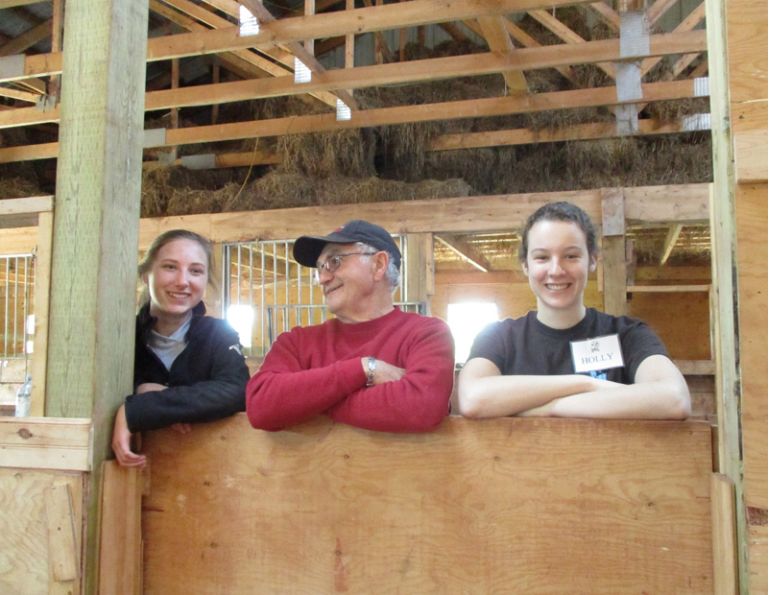
Main Photo; Tom Gayford and Jim Elder by Michelle C. Dunn. Credit: Michelle C. Dunn
Blogs & Podcasts

Advertisement

Related Articles




Advertisement

Featured Stories



Advertisement