80 Articles

By Lindsay Grice - In my program, I lay a solid foundation of understanding and build upon it like a flight of stairs by challenging the rider or horse with a new skill as they master the previous step. This process may not appeal to the thrill seeker, but it preserves the sanity of their equine partner, and mine as well! For example, we wouldn’t go on to a skill at the canter until it was well established at the trot.

Lindsay Grice, Horse Show Safety, equine show safety, horse safety

It is a wise coach who prepares their green competitors for all aspects of show day before it arrives. As a coach who enjoys working with novice riders, I’ve learned that there are as many issues to deal with outside the show ring as inside it.

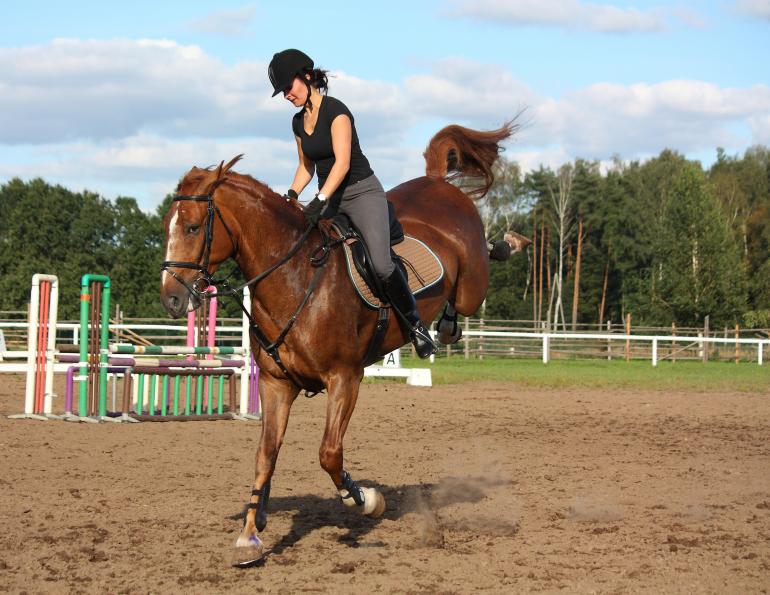
By Lindsay Grice - Rider error can cause horses to rush through the obstacles. Just like horses who rush over fences, those who don’t know how to adjust their own stride and don’t trust their riders’ judgement just want to get it over with. Some people confuse this with eagerness, but it’s actually adrenaline raised by fear. With every mistake, their confidence erodes and their flight instinct takes over.

By Lindsay Grice - If you allow your horse to rub or nibble on you, you become his equal rather than the herd leader. In the horse’s hierarchy system the leader doesn’t allow subordinates to play with her or invade her personal space. Recognize the warning signs in your horse before a bite ever happens.

By Lindsay Grice - “Is it me or my horse?” Every rider has asked herself this question when encountering a problem. But to say a horse likes or respects one rider over another is simplistic – let’s look deeper into the concept of nature versus nurture.

By Lindsay Grice - Going out on his first “field trip” can be overwhelming for a young horse whose training foundation has not been completely set. I like to make sure a horse feels “show ready” in his home environment before I take him to a new place. If your pace, transitions, steering control, etc. aren’t in place at home, chances are things won’t magically come together when you get to the show.

By Lindsay Grice - Most horses tend to cut in on one half of a circle and “bulge” out on the other half. If your horse has bulging problems, he most likely gets “magnetized” toward the fence, the in-gate, or toward another horse. Comparing your horse to a train, I’ll give you some tips to improve your control and be able to keep your horse on the track of your choice.

By Lindsay Grice - It’s important to keep it very simple when coaching children. I usually give the young ones only two or three things to think about before their class. I give the student specific word pictures as guidelines that are easily understood.

By Lindsay Grice - There’s nothing less satisfying than having to haul your horse to a stop. Like a dinner mint after a meal, a precise stop puts a finishing punctuation on a pattern and leaves the judge with a good taste in his mouth!

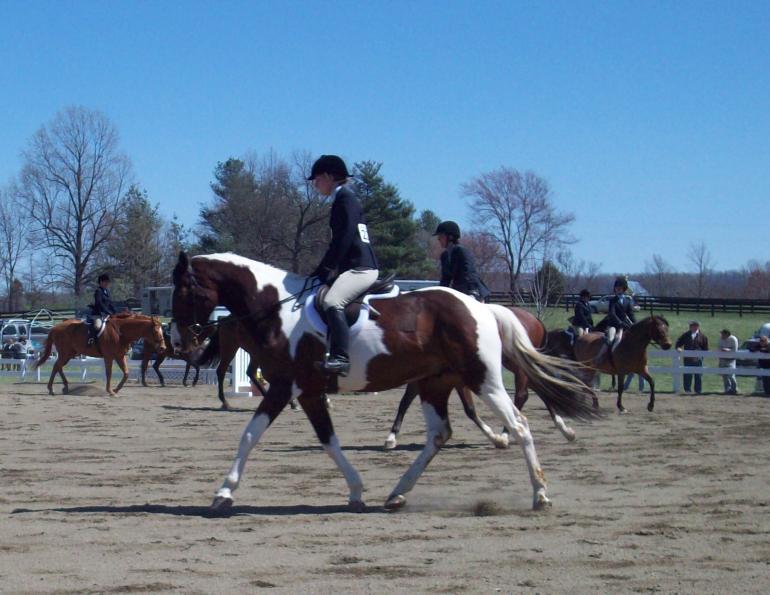
By Lindsay Grice - Horses are evaluated in most disciplines according to talent, training, and temperament. The emphasis in each category will be different in every discipline. Let’s take at what the judges are looking for in Hunter Under Saddle (HUS).

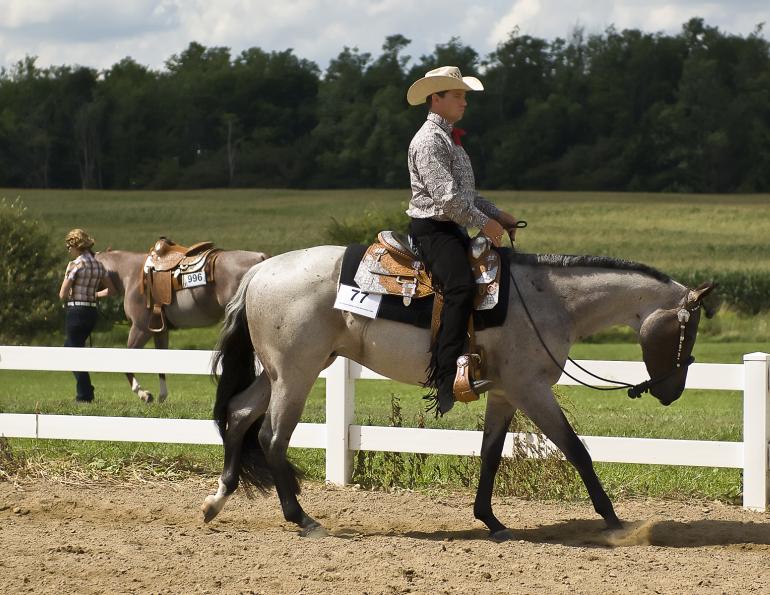
By Lindsay Grice - The Western pleasure class, while historically the most popular class in the stock horse breeds, comes with its share of criticism. Knowing that I judge and compete within the American Quarter Horse Association (AQHA) circuit, the subject of Western pleasure often comes up with the dressage, hunter, and jumper riders in my clinics.

By Lindsay Grice - A rider can communicate confidence with her eyes in any class and, of course, pilot her horse much more effectively. I tell my students that their eyes should shift between three different pictures as they ride.

By Lindsay Grice - I thought about the qualities that I have seen in my most successful students over the years. Beyond putting them in the winner’s circle, these traits will help them to be successful in life.

horse kicking, horse rearing, horse bucking, horse acting out, horse misbehaving, lindsay grice

By Lindsay Grice - From a trainer’s point of view, I can tell you that during the education process the horse often gets worse before he gets better. I regularly see the scenario of a home raised and broke horse, accustomed to marching to his own drum, realising that he’s not the King of the Hill anymore when he finds himself answering to the trainer each day.

Lindsay Grice, how horses learn, horse's brain, horses social animals, horses safe herd, horse survival, equine neocortex, understanding horses, how horses perceive world, fright-flight response, horse brain

Without a doubt, an awareness of the way horses learn has helped me to train more efficiently, effectively, and safely. Like a detective, I approach issues by asking the question, “Why might this be happening?” I look for clues and go through my mental Rolodex of equine behaviour facts to solve the puzzle.

5 Ways to Beat Horse Show Nerves

By Lindsay Grice - Although confidence improves the more often you show, it is helpful to take an honest look at the source of your nerves (what’s the worst thing that could happen, and would it really be that bad?), and block out the distractions.

Choosing the Right Bit for Your Horse

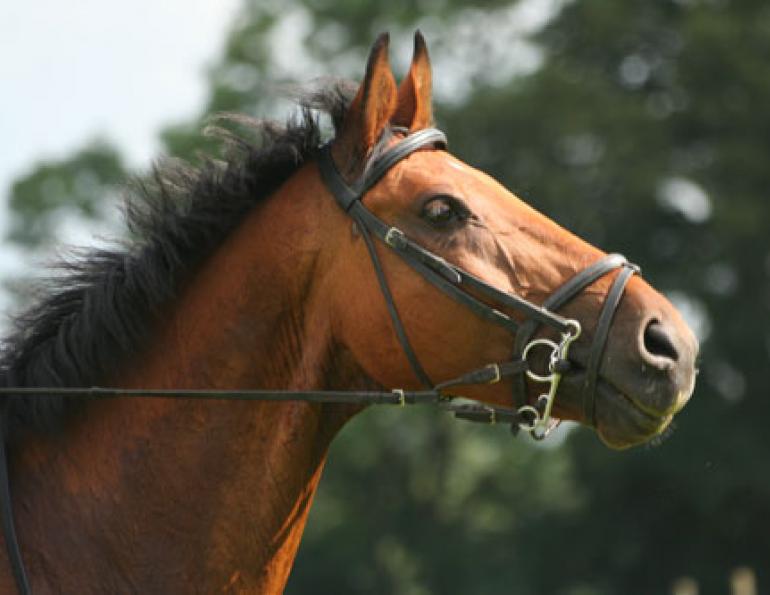
By Lindsay Grice - As the conformation of every horse’s mouth will vary, it’s helpful, once you’ve determined the family or general type of bit, to try it for a few days to see how your horse responds. Unfortunately, this can become an expensive process and most horse owners have quite a collection of “experiments” at the bottom of their tack boxes.

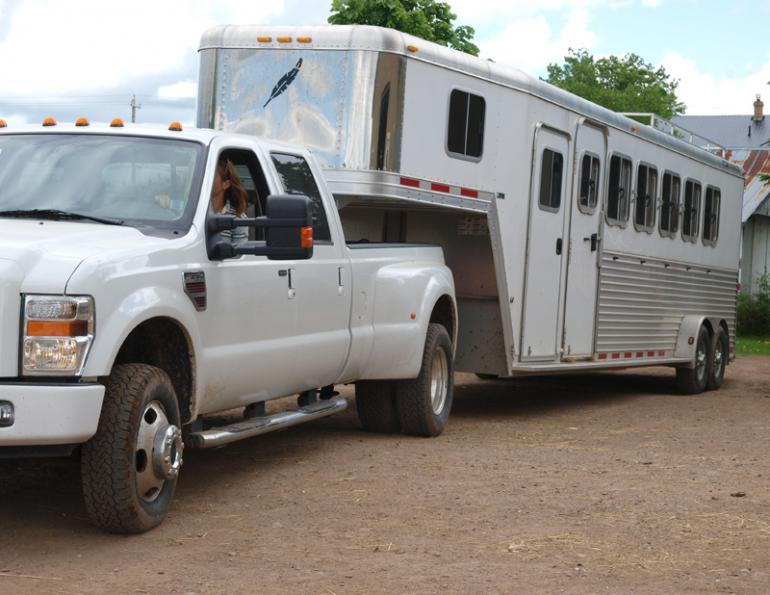
Above all else, a carrier must first be a “horse person.” It’s one thing to be a good driver, but that is of little comfort if someone lacks the confidence and understanding to properly care for your horse. This type of experience is not always easy to detect, but there are a few traits that typify a seasoned handler.

By Lindsay Grice - Knowing what diagonal and lead you’re on is a matter of feeling the rhythm and footfalls of your horse. Knowing which foot hits the ground when puts a rider in tune with his horse. He is more able to influence his horse’s movement if he times his aids according to the rhythm of the strides.

Horse Shopping? 5 Keys to Success

By Lindsay Grice - When I have a client who is looking for a horse, I often need to remind her to shop with her head and not her heart. Colour, cuteness, or a fancy pedigree must take second place to other more basic qualities: temperament, tolerance, training, talent, and soundness.

Pages