


Horse Sport Psychology: The Power of Language in Equestrian Sport

Updated:
September 12, 2025Why your words matter more than you think
By Annika McGivern, MSc, Sport and Exercise Psychology
If you’ve been following along with my sport psychology articles, you’ll know that we’ve spent a lot of time talking about the power of our thoughts. One of the core skills in sport psychology is learning to use positive self-talk — challenging unhelpful or negative thoughts and intentionally replacing them with thoughts that support us. It’s a skill that helps athletes build confidence, stay composed, and approach challenges with a problem-solving mindset.
In recent years, I’ve started paying closer attention not just to the thoughts we have silently in our heads, but to the words we speak out loud. I’ve been working with equestrian athletes to bring more awareness to the language we use — what we say about ourselves, our horses, and our performance. This has helped create an important new layer of understanding. Because language isn’t just a tool to express our inner world — it’s a force that actively shapes how we think, how we feel, and how we experience our sport.
Language is more than a communication tool. It’s deeply intertwined with our thoughts, emotions, beliefs, and memories. And it’s shaped by the culture we’re a part of. In equestrian sport, like in any community, we learn to speak the way others speak. We pick up expressions and ways of describing things without always noticing what they imply. But the words we use can subtly reinforce limiting beliefs and unhelpful emotional reactions or even distort how we see ourselves and our horses.
Related: Harnessing the Power of Visualization in Equestrian Sport
Let’s explore how language shapes our experience, especially in three key areas: how we talk about ourselves, our horses, and our performance. Along the way, I’ll share simple changes you can start making in your language to support confidence, learning, and enjoyment in the saddle.
Why Language Is So Powerful
We have thousands of thoughts each day, many of them fleeting or abstract. When we put words to a thought — especially when we speak it aloud — it becomes more concrete. Language doesn’t just describe experience. It organizes it. It draws our attention to specific parts of it. It assigns meaning, and those meanings stick, shaping the way we perceive and remember our experiences.
Here are three important ways that language shapes experience:
1. Language focuses our attention — The words we choose direct our attention. They highlight certain aspects of our experience and, in doing so, often push other parts out of view.
Example: Rita has just finished her practical equestrian coaching exam. Her coach meets her outside the arena and asks how it went. Rita says, “Oh, it was awful. I was so nervous I could barely think straight!”
That sentence focuses her attention on the anxiety she felt. It narrows her memory of the experience to only the parts that felt difficult. It blocks her from remembering the moments where she was composed, communicated well, or guided the rider effectively — moments that likely also happened.
2. Language influences our perception and emotions — When we put emotional events into words, we’re not just describing what happened. We’re interpreting it. We’re framing it in a specific way — and that framing triggers emotional responses.
Example: Juan has just completed a level 2 dressage test. After leaving the ring, he says to a friend, “That was a mess. I’m disappointed in myself. I should have ridden better. I let Silver down.”
This choice of words creates a strong emotional narrative, one of failure, guilt, and self-blame. It invites emotions like shame, frustration, and sadness. Those emotions can linger and influence how Juan feels about himself as a rider not just that day, but long-term.
Related: Navigating Stress and Emotions for Success at a Horse Show
3. Language creates mental frameworks — We are meaning-making creatures. We naturally look for patterns and build narratives to help us understand the world. Language gives structure to those narratives. Over time, repeated language creates a mental framework — a kind of lens through which we interpret future experiences.
Example: Chung Hua has just finished a 3-foot hunter round at a competition. Walking away from the arena, she says to her mother, “I suck at this. I can’t believe how many mistakes I made. I’m never going to be a good rider.”
This way of speaking reinforces a mental framework where mistakes equal failure and only mistake-free riders can be considered “good.” That kind of framework not only crushes confidence — it’s also inaccurate and unhelpful.
Here’s the catch: Just because a sentence feels like it's describing reality doesn’t mean it is. Juan’s test might have had strong moments, even if it wasn’t perfect. Rita may have been nervous and still performed competently. Chung Hua is on a new horse and is new to the 3-foot arena - mistakes are part of the process, but language, when chosen without care, can obscure those truths.
The Language We Use About Ourselves
Your sense of self — your confidence, your belief in your ability to improve, your motivation — all of that is influenced by the words you use to describe yourself. Yet, equestrians often fall into self-deprecating habits when something doesn’t go well. We say things like “I’m terrible at this” or “I’ll never get it right,” shrinking our identity down to a single bad moment. But there’s power in speaking to yourself with more balance and self-respect.
Imagine if Chung Hua, after that same round, said, “That was harder than I expected, and I’m feeling frustrated, but we’re still figuring each other out. I trust myself to keep learning and get better.” That version tells the truth, and it tells the whole truth. It creates space for growth, acknowledges progress, and protects her confidence.
The Language We Use About Our Horses
The words we use to describe our horses matters just as much. In equestrian sport, it’s common to use language that personifies horses — that is, we attribute human motivations to their behaviour. These are phrases like: He’s being so naughty today; or She knows what I want and just refuses to do it; or He’s trying to get out of work.
Related: Psychology for Equestrians: First, Focus on Yourself
These statements imply intentional defiance, as though your horse is scheming against you. While this is a common way to talk, it creates an emotional narrative of conflict. It breeds frustration and reduces trust between horse and rider.
Remember, horses don’t think the way humans do. They’re not manipulative or vengeful. Equine Behaviour Specialist Emma Kjelson offers a helpful reminder: If a horse isn’t doing what you’re asking, there are usually three possible reasons:
- They don’t understand what you’re asking;
- For physical or emotional reasons they can’t do what you’re asking (because of pain, fear, confusion, or fitness);
- They’re too stressed or overwhelmed to process the request.
So, instead of saying She’s being difficult, try saying:
- She didn’t respond the way I expected. I wonder if something is unclear or uncomfortable for her. Or,
- He’s not doing what I asked — what can I change to help him understand or feel more confident?
That shift in language changes everything. It moves us from judgment to curiosity, from frustration to compassion, from blame to partnership.
The Language We Use About Our Performance
Now let’s talk about how we describe our performance — especially when it didn’t go how we hoped. Equestrian athletes are often quick to criticize themselves and slow to acknowledge progress. We focus on mistakes and gloss over what went well. But balanced language leads to better learning and a more positive mindset.
Related: Developing the Best Learning Environments for Riders and Horses
Imagine if Juan had walked out of the arena and said: That didn’t go exactly how I wanted. The canter felt really solid, but we were tense in the trot. I lost focus a bit at the start. I’ll work on that before the next one. This is accurate, constructive, and emotionally grounded. It focuses on both strengths and areas to improve. It protects confidence while inviting reflection. That’s the goal — not sugar-coating or pretending things were perfect — just aiming to speak about performance in a way that’s honest, fair, and useful.
Final Thoughts: Your Words Shape Your Ride
Words are powerful. They shape how we see ourselves, our horses, and our rides. The good news is that language is a skill. Like riding, it can be practiced. You can learn to choose your words with more care, more clarity, and more compassion.
So, start paying attention. Notice the patterns in how you speak about your rides, your horse, and yourself. When something feels heavy, harsh, or unfair — get curious. What could you say instead that would still be true, but more helpful? Small shifts in language can create big changes in mindset, relationships, and performance. They can build your confidence, strengthen your connection with your horse, and make the journey more rewarding. You don’t have to get it perfect. Just start experimenting and keep listening and adjusting. Because the words we choose don’t just describe our riding journey — they help define it.
Related: High Performance Habits for the Horse Competition Season
Related: High Performance Values for Equestrians
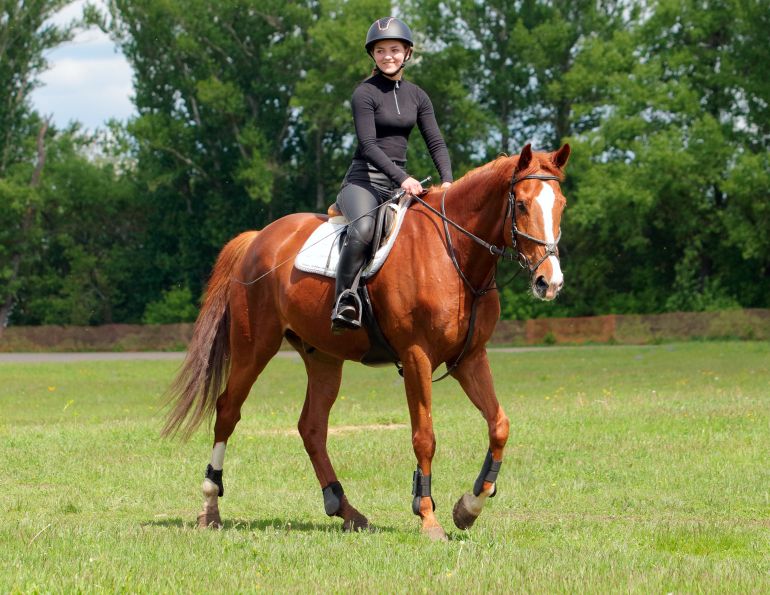
Photo: Dreamstime/Leah Ann Richardson
Blogs & Podcasts
Advertisement

Related Articles


Advertisement

Featured Stories




Advertisement
