


No Hills? No Problem: Horse Conditioning Without Hills

Updated:
October 2, 2026Dressage, Hunter Jumper, Eventing, Other, Reining, Western Pleasure, Other, Schooling, Ground Work & Handling
Finding Alternatives for the Conditioning Goal
By Jec A. Ballou
Many riders worry that their lack of access to hills means their horses will miss important conditioning benefits. But before charging up hills, or fretting about their absence, riders should first consider the specific gains they were hoping to make. A horse recovering from injury, for instance, will use and benefit from hills differently than a moderately fit horse aiming to improve stamina or performance. After specific goals are identified, relevant substitutions can be explored. Whether you need hills depends on what you hope to achieve.
Hills are a highly praised fitness tool because they influence numerous conditioning adaptations, including increased strength and cardiovascular fitness. All hills, however, are not the same, nor do they guarantee beneficial outcomes. The steepness, exercise duration, and speed of travel all determine which gains are made.
As a partial list, hill work is commonly prescribed to:
- Increase force production of hindquarter muscles
- Improve postural stability, core function, and movement patterns
- Enhance coordination and limb control
- Build aerobic fitness and resilience
- Improve muscular endurance
- Restore balance and movement quality after injury
As evidenced by this list, the advice to train your horse on hills is often too broad. Using hills for postural stability, for instance, will differ significantly from using them to boost aerobic fitness. A rider first needs to understand which of the above outcomes should be targeted. Hills might be a gold standard, but in many cases, there is a decent substitute.
Horses in Rehab
Veterinarians and rehab professionals often recommend hills to retrain movement after sustained layups or in cases of horses needing to improve coordination and body control. Unlevel terrain such as gentle — not steep — hills demands trunk stabilization, coordinated limb placement, and heightened proprioception. This stimulus is most effective when dosed in short but frequent sessions of just a few minutes at a time. The most useful tasks in these cases do not require marching straight up and down slopes. Instead, a very small section of the slope is used to perform, for example, small circles or zigzags.
Related: The Benefits of Cantering Your Horse

If your stable area is flat, create surfaces that differ from the smooth, predictable ground the horse is familiar with. Photo: Clix Photography
The goal is to not overtax the horse or create soreness. In this case, handlers and riders also want to avoid hills that are so steep or long that they create poor postural habits or excessive tension to navigate them. Rolling, easily managed terrain is ideal.
Most equestrians have access to a suitable area without realizing it. When targeting coordination, core control, and stability, there are numerous solutions that exist around most barns. A small area from 20 to 40 square metres will suffice. Driveways, berms, drainage ditches, and unlevel paddocks work just fine. I have also seen many riders create their own swale by dumping and packing a pile of dirt adjacent to their arena. This provides them a slope — albeit small — to practice weight shifts, backing, transitions, and other rehab manoeuvres.
If, however, your stable exists on totally flat ground in every direction, you will need to be creative. Remember that the goal is less about being on a hill and more about providing the horse with opportunities to improve coordination and body control. The main priority is to find, or make, surfaces that differ from the smooth and predictable ground the horse is familiar with. This might include creating areas where the ground is rough or constantly changing (gravel, grass, hard-packed dirt) or requires the horse to step up or over objects like rocks and logs. Or it might include constructing obstacles like a pedestal or small bridge. When used consistently, these can create good results.
Horses Building Strength
Beyond rehab, many riders use hills to develop strength in the propulsive muscles of the hindquarters. Specific benefits depend on speed and duration, but brisk uphill riding generally increases force production from the extensor chain while downhill riding demands flexion and stamina of the pelvic muscles. Hills can improve the mechanics of hind limb flexion and extension while also inducing strength gains in the large force-generating muscles.
Related: Blog - Multi-Discipline Horse Conditioning Evaluation

Build force production by alternating in quick succession between trotting over raised poles and cantering over low cross-rails. Photo: Clix Photography
When lacking hills and keeping these goals in mind, the question becomes how to create more muscular force on flat ground. To some degree, ground poles can help. Strength-focused patterns like raised trotting and cantering poles mimic some of the demands of moderate hills (walking over ground poles does not promote the same force production). Specifically, sequences of raised poles that require the horse to both shorten and then lengthen its stride generally work best. Another valuable routine for force production is to transition back and forth between riding over raised trotting poles and cantering over low cross-rails, combining these efforts with quick repetitions.
Aside from ground poles, speed play can serve a similar conditioning role. Brisk surges or accelerations of trot within periods of ordinary-tempo trotting benefit the extensor chain. To substitute for hills, strength intervals of rapid trotting or cantering should be performed for approximately 20 strides followed by a brief recovery at a slower tempo and repeated a suitable number of times based on the horse’s current fitness level. Likewise, rapid sequences of trot-to-canter transitions require hindquarter propulsion while stabilizing through the trunk. Also, rein-back-to-trot transitions can mimic hindquarter flexion and eccentric muscle firing of riding downhills.
Lastly, asking a horse to pull a load behind them like a weighted sled or tire can work wonders on extensor chain strength. While it may not be suitable for every horse, numerous horses take a liking to dragging something behind them. This can serve as a highly effective replacement for trotting up hills.
Horses Needing Aerobic Superpower
Certain disciplines like endurance racing, eventing, and carriage driving often seek hills for cardiovascular advantage. In these cases, the goal is not just strength but improving aerobic capacity and stamina. Long steady hills bring the horse to the upper limits of its aerobic threshold for a sustained period, creating a meaningful conditioning response. This is the most difficult hill use scenario to replace.
Related: How to Build a Successful Rehab Program for Horses with Undiagnosed Pain

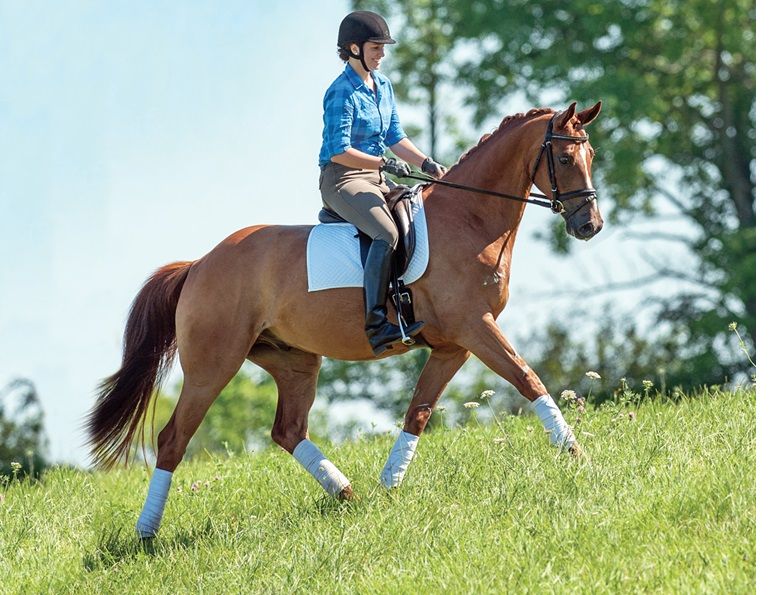
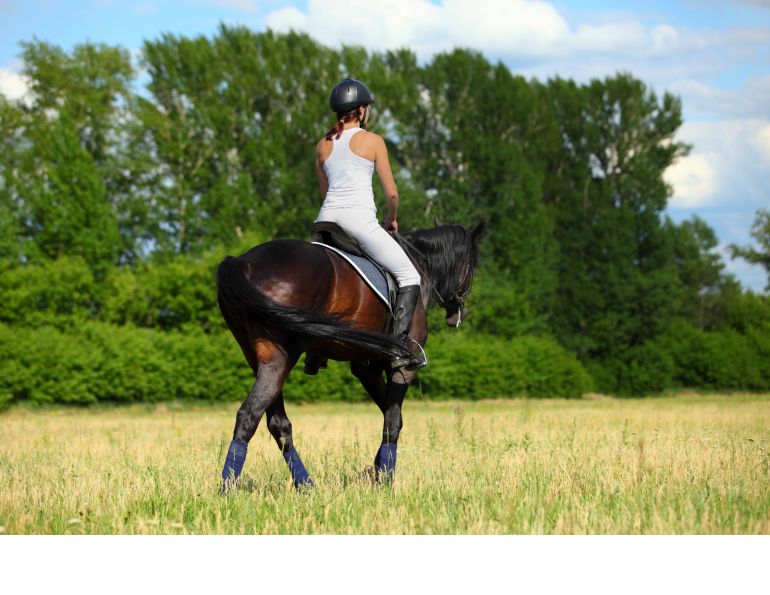
Long, steady hills build aerobic capacity and stamina by sustaining effort near the upper limit of the aerobic threshold. Without hills, structured intervals of brisk trotting or cantering, ideally on straight cross-country stretches, can create a similar conditioning response. Photo: iStock/Amriphoto
To achieve similar sustained cardiovascular efforts, it becomes necessary to perform structured intervals of very brisk trotting or cantering where the horse’s heart rate rises to approximately 150 bpm. For athletic horses, it can be hard to hit these numbers by simply moving around the arena at quicker-than-normal tempos. Without the extra effort imposed by hills, riders need to notch up the intensity through speed, and ideally by riding cross-country. It is best to work primarily on straight lines in this instance. To induce meaningful aerobic conditioning for a moderately fit horse, these intervals of fast trotting or cantering should last a minimum of six minutes or longer, followed by a brief rest and then repeated an appropriate number of times based on the horse’s current level and goals.
When to Seek Hills
Hills remain an excellent conditioning tool, but they are not essential. By understanding the purpose of hill work and how it might benefit their individual horse, riders can successfully replicate those benefits using alternative exercises.
The key is to first identify the desired outcome. Then, it might become clear that an existing drainage ditch, or obstacles, or a gently sloping paddock might suffice. Or it will clarify which ground pole routines to employ or how to approach speed intervals.
Conditioning horses without access to hills does require extra creativity and planning and commitment, but it can indeed be done successfully.
Related: How to Use Hills for Horse Training
Related: Blog - Conditioning Horses: Stability Before Strength
Related: How Does Footing Affect Fitness in Horses?
Photo: Clix Photography

Advertisement

Related Articles


Advertisement

Featured Stories





Advertisement
