


Amy Millar's Show Jumping Training Tips: Building Better Horses

Updated:
October 7, 2026Insights and training tips from the CSHA’s 100-year celebratory clinic
By Tania Millen, BSc, MJ
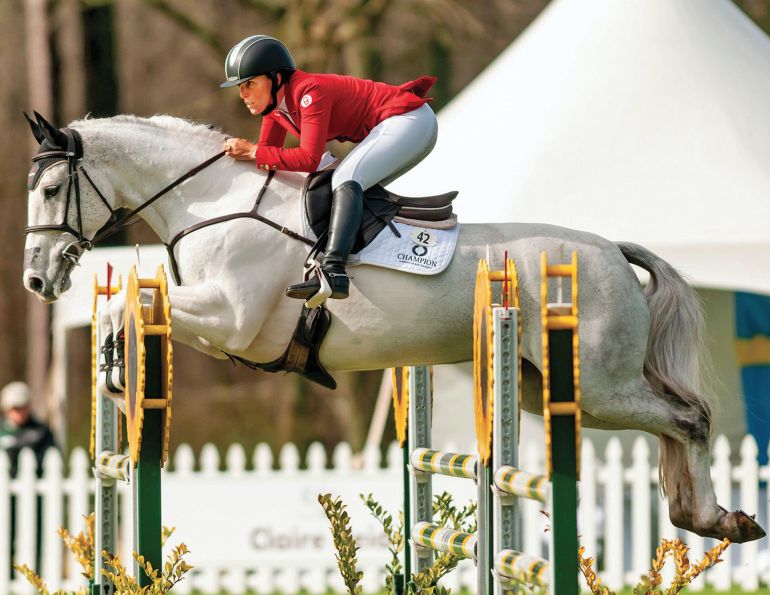
“The goal is a horse that jumps consistently well because it has been shown the correct way every time,” says Amy Millar, who show jumped for Canada at the 2016 Rio Olympic Games, 2022 FEI World Championships, and was a member of Canada’s silver medal team at the 2023 Pan American Games.
Millar’s two top horses are known for their consistency.
“Jagger HX and Gaiete D’Elle can both jump world championships, which is super exciting because I've never been in a position where I had two horses that can do that,” says Millar.
Developing top horses is a long, slow process, so Millar already has the Los Angeles Olympics in 2028 on her radar but may change focus after that.
“I love doing what I do, but I have two children and a husband at home — who are very supportive — but at some point, I’ll probably stay closer to home,” she says.
“Riding brings me a lot of happiness, and when I’m not competing, I have such a good time training horses at home,” Millar says. “I really enjoy teaching them grids and watching them learn and get better and better. So that’s what I see myself doing.”
That’s exactly what Millar helped riders do at the 100-year celebratory clinic organized by the Canadian Sport Horse Association on June 8, 2026, at Rocky Mountain Show Jumping near De Winton, Alberta.
Related: From Farm Horses to Olympic Champions: 100 Years of Canadian Sport Horses
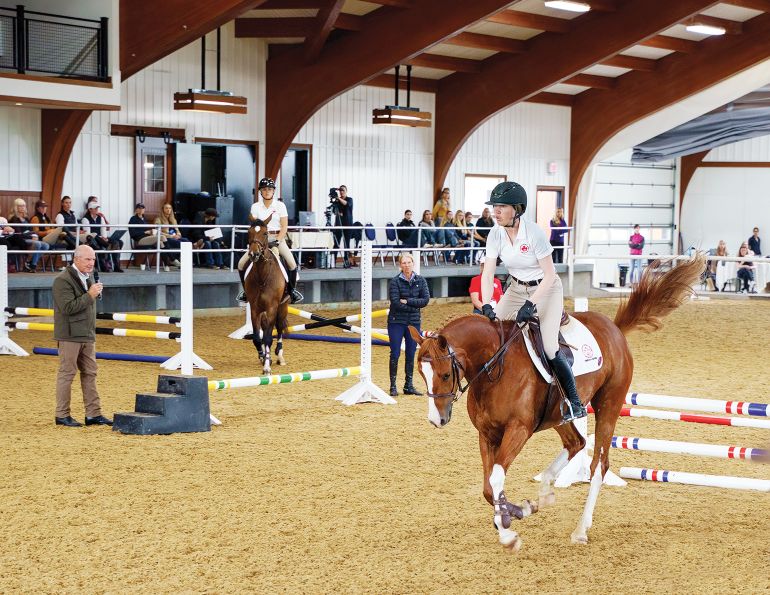
The clinic was split into two groups: a beginner jumper session of five riders with horses that were showing up to 1.2 metres, followed by an advanced jumper session of four riders with horses competing over 1.35 metres.
Millar gradually built a five-jump grid that the riders cantered down one side of the outdoor ring, then added elements for a 12-jump course.
Here’s what she shared.
1. Build a strong foundation
- Riders must be in the correct position to avoid giving accidental aids that confuse the horse.
- Everything needs to be soft—hands, aids, expectations.
- Train for three non-negotiable basics: whoa, go, and turn.
- Consistency matters. Every ride is either training or untraining.
- Rideability is the goal. In big jumper classes you must be able to do a six-stride line in five, six, or seven strides.
2. Do less and allow mistakes
- Believe in the horse. Correct only when needed.
- Leave the horse alone, stay centered, and let the exercise do the teaching.
- Avoid micromanaging and let the horse make small mistakes so they can learn.
3. Design exercises for straightness, rhythm, balance
- Horses must learn to maintain rhythm from start to finish. Design exercises so the horse maintains rhythm and balance on its own, not because the rider holds it together.
- Horses naturally want to lengthen, so use exercises with shorter distances.
- Circles, grids, and varied stride lines teach horses to wait, compress, and stay rideable.
- Straightness and corners are imperative. Every course is built on curves, and falling-in makes everything harder. Use poles, V poles, and thoughtful track riding to help horses stay straight without overusing the leg or hand.
- Add only one variable at a time, especially with young horses — height or complexity, not both.
- Use downward transitions to teach horses to rebalance.
Finally, Millar says, “Persevere and enjoy the journey because there is so much to learn about horses and this sport. If you enjoy learning and you love horses, then you’re going to win some, you’re going to lose some, but you’re always going to be improving. So, it’s about perseverance and never giving up and always remembering that we do this because we love horses.
“They’re incredible animals — and man, are we ever lucky!”

Maren Lawrence riding Cordelia NF, a 2017 mare by Chacoon Blue. Maren has competed up to 1.5 metres in North America and Europe and was riding in the beginning jumper group. She bred Cordelia at her Nordic Farms. Photo: Kim Berlie Photography

Jordyn Phillips riding North Star VDH, a 2018 gelding by Balou du Rouet. Jordyn is a 16-year-old who has competed up to 1.25 metres and is aiming for Young Riders. North Star was approved for breeding by the CSHA prior to being gelded. They rode in the beginner jumper group. Photo: Kim Berlie Photography

Alyssa Gillis riding Maddam VF, a 2017 mare by Messenger VF. They compete in 1.3-metre classes and rode in the advanced group. Maddam was the first foal by Messenger. Photo: Kim Berlie Photography
Related: The Madden Method Symposium
Related: Tiffany Foster Symposium: Making Riders Think
Related: 22 Exceptional Canadian Sport Horses: Cilroy to Hickstead
Main Photo: Amy Millar teaching jumper riders on June 8, 2026, at Rocky Mountain Show Jumping in De Winton, Alberta. The day-long symposium was organized by the Canadian Sport Horse Association Alberta Chapter in celebration of their centenary. Photo: Kim Berlie Photography
Blogs & Podcasts
Advertisement

Related Articles

Advertisement

Featured Stories




Advertisement
