


Developing a Horseman’s Eye: What Judges Look for in Horses

Updated:
May 8, 2026By Lindsay Grice, Equestrian Canada coach and judge
I’ve been watching horses for years, first wistfully as a horse-crazy girl from the spectator seating at the Royal Winter Fair, and later making my living watching horses as a horse trainer, riding coach, and judge. As a trainer, I’ve studied horses circling around me on the end of a lunge line, recognizing signs of tension, relaxation, or hints of gait irregularities.
I’ve trained my eye to recognize a “good mover” when selecting a show prospect for a client or a comfortable ride for a recreational rider. From the saddle, I glance regularly at a horse’s neck alignment and ear position. As a coach, I watch from the arena centre, noting the interaction between horse and rider: timing of aids, subtle signs of bracing and softening.
As a judge, I compare one horse to another as they travel around the rail, jump a course, or set up for conformation.
Developing a horseman’s eye is a lifelong process of seminars, study, and experience.
An Eye for Conformation
Correct conformation is the best bet for a horse’s long-term soundness. Consequently, horse show judges are trained to prioritize balance and structural correctness when assessing conformation. Balance before beauty — handsome is as handsome does.
Balance is the smooth blending of all parts — front to back. The length of the horse’s neck, back, and croup should be equal in proportion. When I view a horse in profile, I look to see a trapezoid (remember your grade nine geometry?); a short back, longer underline; shoulder and croup long and sloping; withers and top of pelvis fairly even in height (or a slight uphill build, but never downhill).
Related: Winning Tips for Flat Classes

When viewing a horse in profile, look for a trapezoid — short back, longer underline; shoulder and croup long and sloping; withers and top of pelvis fairly even in height (or a slight uphill build, but never downhill). Pictured are the Thoroughbred legends Northern Dancer (above) and Secretariat (below), who was considered to have near-perfect conformation. Photos by Tony Leonard

Structural correctness is the alignment of bones and joints. Forelegs, viewed from the front, should be centred under the points of the horse’s shoulders — a line bisecting the forearm, knee, cannon, fetlock, and the bulb of his heel. I picture my son stacking soup cans in a tower as a little boy — if one soup can was out of alignment the tower eventually toppled.
Related: Navigating the Gate with Your Horse
Viewed from behind, a line should bisect the horse’s gaskin, hock, cannon, fetlock, pastern, and foot (although hind feet typically turn out a whisker).
Aligned joints can best carry weight, absorb concussion, and move limbs efficiently with no winging or paddling. As renowned scholar C.S. Lewis noted, in pondering the hard things of the world, things not as they ought to be: “A man does not call a line crooked unless he has some idea of a straight line.”
A horseman’s eye traces the theme of balance right down to the ground: No foot, no horse. And no wonder, when a thousand-pound horse is supported on four relatively small hooves. As a judge, I’ve seen some stunning horses track past me in profile yet on closer inspection their feet are problematic. A balanced hoof, in a nutshell, is the optimal size and symmetry of shape to support the horse and distribute his weight equally through the entire foot, not unlike tire balance and alignment on a vehicle. When all four tires are pointing straight, weight is evenly contacting the road’s surface, the car hums along smoothly. Perceptive drivers are alert to minor deviations. Regular maintenance prevents costly repairs. Because horses’ feet are always growing, an experienced horseperson trains their eye to recognize and alert the farrier to slight deviations in hoof balance.
In profile, the horse’s hoof should be aligned with his pastern — a line drawn through the centre of pastern and hoof should be parallel to the front of the hoof wall. Also, look for the line from the coronet band to the toe, and coronet band to the heel, to be parallel. Underrun heels are common — when the heel angle is lower than the toe angle.
From the front, a line bisecting the centre of the horse’s pastern through his hoof should have the same amount of hoof on each side of the line, with both halves meeting the ground at the same angle, i.e., in symmetry. In motion, the hoof should hit the ground flat, landing neither toe first nor rolling from outside to inside.
Desirable conformation traits vary somewhat among equine breeds and according to a horse’s job — racing, reining, jumping, dressage, or driving. As a judge, at times I’m comparing apples to oranges. Nevertheless, I endeavour to evaluate the best example of one breed to the best example of another. Etched in my mind is the ideal breed standard of conformation illustrated in their respective rule books — Quarter Horse, Arabian, Morgan, or Miniature.
Each discipline places its unique demands on the horse’s body, yet balance and structural correctness are the common valued thread through all breed standards.

In judging conformation, balance and structural correctness must be prioritized. A judge’s eye traces the theme of balance right down to the ground. Photo: Lynn Burkholder
An Eye for Horse Movement
An educated horseman’s eye recognizes gait rhythm and regularity — each gait has its own pattern. Identifying the pattern is important for me as a judge in assessing penalties for breaks of gait, scoring the accuracy of transitions, and evaluating the timing of lead changes. For example, some penalties increase depending on the number of strides the horse is out of the required gait; judges are trained to watch the horse’s legs. We also appraise the pureness of each gait. For example, a four-beat canter won’t rate high on the judge’s score card.
Dr. Hilary Clayton, the leading expert in equine biomechanics, summarizes: “In evaluating movement, I look for symmetry, fluidity, and straightness. A horse that moves easily, without tension or restriction, is generally well-conformed for the task at hand.”
As one’s eye learns to recognize correct gait patterns, one also learns to discern when something’s “off,” as a bank teller learns to spot a counterfeit.
Related: Why Horses Rush Jumps
Lameness is an abnormality in movement — an unevenness in the horse’s gait. Commonly, equine association rule books describe lameness worthy of disqualification on the severe end of the equine lameness scale: Consistently observable at a trot. More subtle lameness issues — a shorter stride, a slight head nod (for a front-end lameness), or a hike of the hip (for a hind-leg lameness) can be difficult to spot for the novice rider, but may be more easily felt under saddle.
What’s a “Good Mover?”
As a young equestrian, I’ll never forget participating in a What Judges are Looking For clinic. The clinician described my beloved Standardbred horse’s average way of going as choppy, having a “fold” in his ankle - What??
My coach selected my next horse, a hunter, because he was a good jumper and a good mover. Yet, it’d be years before I’d know what that meant. All I knew was, despite my lack of flat class show ring savvy, the judges usually picked him out.
As an aspiring professional, I was determined to learn what separates excellent movers from the good ones, and good movers from the average. I watched class after class, studying horses’ legs in motion against the backdrop of white coliseum boards. I noted the patterns of their footfalls, the reach of their limbs, the angles and suppleness of their joints.
Related: Equitation Essentials - The Hows and Whys of a Winning Riding Position

As a judge I’m trained and always learning to separate excellent movers from good movers, and good movers from average movers. Photo courtesy of Lindsay Grice
A quality mover, like conformation, differs among breeds. In general, the good mover swings his shoulders and hind legs freely forward. His joints articulate with elasticity. He moves efficiently, with uphill balance and self-carriage.
Of course, another way to learn about good movement is to ride a good mover — and to ride a few not-so-good movers. Undesirable movement is stiff and choppy, rough to ride, like my first horse (the Standardbred), but I sure learned to sit a jarring trot!
It was after my first fall fair horse show outing with that beloved Standardbred (an eye-opener for sure - What’s the difference between equitation and hunter under saddle? Halter and showmanship?) that I jumped at an invitation to groom for a friend at a sanctioned competition. There at ringside I studied deep-heeled, straight-backed riders, jumping the obstacles rhythmically and straight. I schooled my eye with excellence and endeavoured to replicate it on home turf.
Eye for Equine Body Language
Humans communicate verbally with a vast vocabulary of words. In contrast, the equine vocabulary of vocalizations is limited. Yet your horse’s lexicon of body expressions is vast; every micro-reaction is easily discerned in his social group. How many cross-tie blowups or arena corner spooks could be averted by riders recognizing equine body language, detecting the onset of their horse’s tension, alertness, or wariness? Consider your horse’s perspective if you’re chatting away to him while inattentive to the messages your own body movements might be communicating — it’s the equine social faux pas of failing to “read the room.” Seasoned horse trainers have learned, through trial and error, to “read horse.”

Training our eye is learning to “read horse” — to notice details, patterns, shapes, alignment, movement, and expressions. Photo courtesy of Lindsay Grice
And now, researchers have developed an evidence-based tool for identifying and coding facial movements in horses. The Horse Facial Action Coding System “opens up new possibilities for understanding equine emotions and improving welfare,” explains Dr. Leanne Proops, a professor in animal behaviour and welfare.
“It gives us a new lens through which to view and interpret their behaviour, ultimately leading to better care and stronger human-animal relationships.”
For example, aggressive horse encounters are marked by flattened, backward-facing ears, raised inner brows, dilated nostrils, and lowered heads, whereas horses mostly exhibit neutral facial expressions during friendly interactions.
When horses are alert or investigating, their ears are typically forward and their eyes blink more rapidly. They adjust their head positions to maximize sensory input; for example, elevated for seeing long distance and perpendicular to the ground to cross poles and puddles.
In art class we were told “drawing is seeing.” The artist learns to observe and capture what’s in front of them, not what their mind imagines. In the same way, training our eye as riders is learning to see — to notice details, patterns, shapes, alignment, movement, and expressions.
It’s learning to “read horse.”
Related: Showmanship Skills
Related: Common Horse Show Mistakes and How to Turn Them into Progress
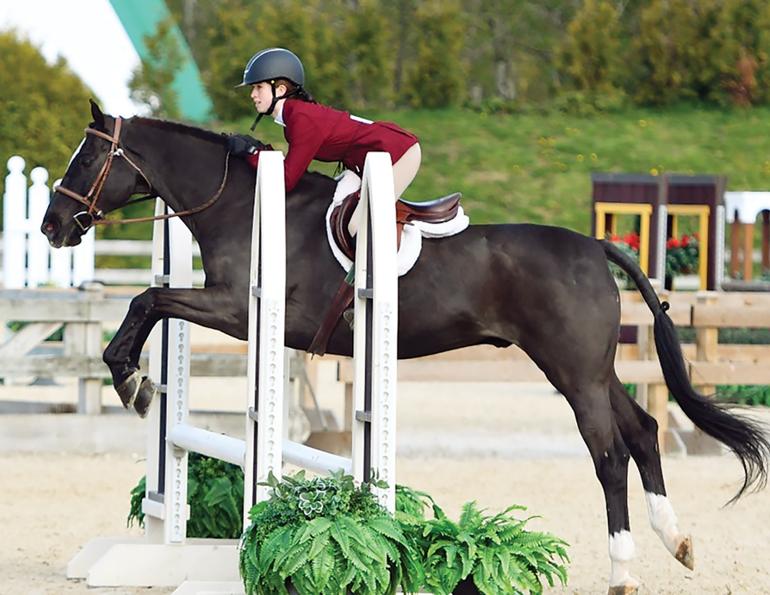
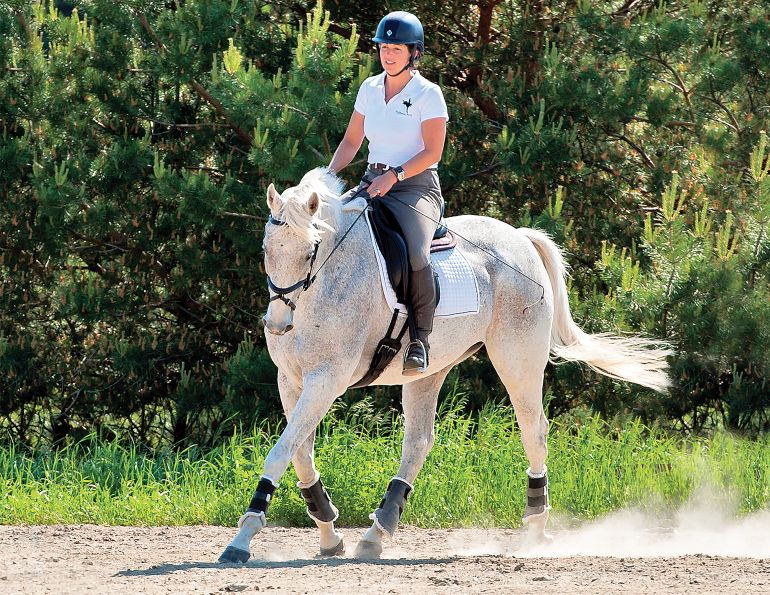
Main Photo: Sarah Wyatt

Blogs & Podcasts
Advertisement
Related Articles

Advertisement

Featured Stories






Advertisement
