Management & Maintenance

how to deal with horse farm mud, managing muddy horse farm, how to control manure management, managing horse manure

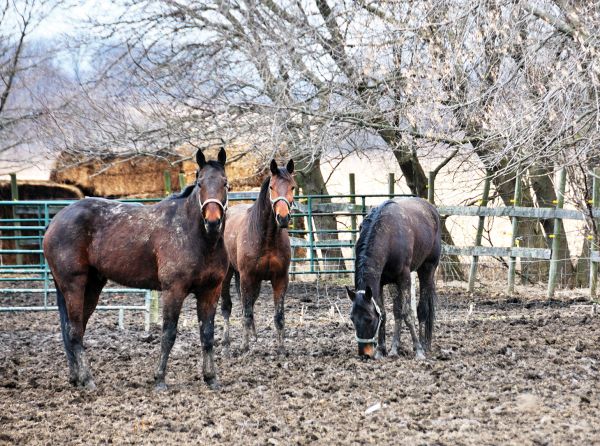
Is excess mud a challenge where you keep your horses? Some properties are naturally more prone to wet, messy conditions than others. Persistent moisture in the ground is the main cause, influenced heavily by the soil’s makeup and the lay of the land. After heavy rainfall or spring thaw, clay soil tends to hold water for long periods, while sandy soil drains faster. Low-lying areas are also problem spots, as runoff accumulates there and creates soggy, muddy patches.

horse-related contracts, buying a horse, legal documents horse sale, horse insurance contracts, horse breeding contract, karen weslowski

In the past, horse business transactions often relied on handshake agreements. Today, written contracts are increasingly common for buying and selling horses, as well as for services like training, leasing, breeding, and boarding. Contracts provide clarity and legal protection for all parties involved. As contracts become more prevalent in the horse industry, it’s important for horse owners and horse business owners to understand the basics of contract law. This guide will explain the key elements of a contract, offer tips for drafting horse-related contracts, and cover the common breeding contract.

karen weslowski, legal contracts buying a horse property in canada, what to know when buying a horse property in canada

For many, the idea of buying real estate is an enticing one, often conjuring images of a quaint home with a welcoming front patio and a classic white picket fence. For equestrians, however, the dream expands significantly. It's about vast green pastures, a barn that exudes luxury, secure fencing, and a space perfectly suited for horses.

horse enrichment, equine enrichment ideas, horse quality of life, enrichment for boarded horses, horse welfare, equine well-being, horse management tips, horse turnout enrichment, horse mental stimulation, equine behavior enrichment, horse care, enrichment for horses at boarding barns, natural horse keeping, movement for horses, horse environmental enrichment

If you’re reading this, chances are you have a special horse (or two) in your life and are curious about enrichment — how to make their world more stimulating, playful, and fulfilling. My goal is to bring those two worlds together: your love for your horses and the concept of enrichment. With the right ideas, you can make their daily lives more interesting, movement-rich, and deeply worth living.

running a horse barn, barn culture, working in the equestrian industry, how to fit in horse barn, annika mcgivern

You may think your barn community is too small to have something as fancy as its own culture, but it does. Whenever groups of people come together through common goals, interests, and patterns of behaviour, a culture is formed. A culture is a set of shared beliefs, attitudes, knowledge, practices, and behaviours. A strong culture can help all involved reach higher and further than they can alone. However, when a culture isn’t shaped intentionally, it may not serve its full potential. In some cases, a culture can even become harmful to those within it.

respiratory illness horses, dust management equestrian centre, horse farm dust, reducing dust for horses, dust and horses

Equine asthma or “heaves” can cause exercise intolerance, difficulty expelling air, inflammation of lung epithelium and narrowing of bronchus, persistent cough, and nasal secretions from mucous production. All of the above can turn a riding horse into a pasture ornament and or in worst case scenarios, bring about important quality of life decisions. Don’t wait for these signs or a tell-tale heave line to appear before taking steps to reduce dust, mould, and particulates in your horse’s environment. Two of the top sources of these are hay and bedding. These management tips will help you minimize dust and provide a healthier environment for horses and people.

Horse owner's vacation checklist, horse care, equine care, horse worries, keep horses safe while you vacation

You’re lying on a beach in an exotic locale, soaking up the sun, sipping on a fruity beverage, seemingly without a care in the world. But all you can think about is: Will my horse be okay while I’m gone? Is he getting his supplements? What if he’s injured or falls ill? A vacation isn’t a vacation if you’re constantly worrying about your horse. Get the most out of your getaway by following these steps to ensure your horse’s well-being, and your peace of mind.

equine emergency preparedness, horses stuck flooding, preventing barn fire, emergency services horses, help for horses disaster, kevan garecki, bc flooding horses

There’s Far More To It Than You Might Think - In November 2021, my wife and I spent four devastating days in Sumas Prairie, Abbotsford, British Columbia assisting with the rescue and evacuation of animals following the disastrous flooding caused by the “atmospheric river” of torrential rain in mid-November that year. It’s one thing to watch it on the news — it’s surreal to be on the ground in the middle of it.

equine biosecurity, disinfecting horse barn, disinfecting horse footbaths, preventing disease horse barns, uc davis center for equine health

Practicing good biosecurity at home and while traveling is essential for your horse’s health and safety, and is an important part of industry-wide disease control measures. We collaborated with Dr. K. Gary Magdesian, infectious disease control officer and faculty member in the Equine Internal Medicine Service at the UC Davis veterinary hospital, to present a list of important things to remember when it comes to equine biosecurity.

best types of barn dog, best type of barn cat, horses and cats, horses and dogs, taking care of barn animals

Essential Workers - Farm dogs and barn cats are indispensable team members at many horse farms. Dogs protect the farm, help round up livestock, keep predators away, tell their owners if a horse is in trouble, and are cherished companions. Meanwhile, barn cats prevent mice and other rodents from taking over the grain bins and hay storage, plus entertain their owners with funny antics. But not every dog or cat is suitable for a horse farm.

Pages