Natural Horsemanship

diquita cardinal cardinal ranch, denny emerson tamarack hill farm vermont, how to understand your horse, how to be a horse person, best horse trainers

For generations, riders and horse lovers have been enthralled by the mystique of horsemen (and women), but many struggle to define what a “horseman” actually is. Is a horseman someone with a laundry list of skills such as starting young horses, nailing on shoes, being knowledgeable about horse care, and having the ability to train horses to the highest levels? Or is a horseman someone who lives in the moment, has mastered their emotions, and understands a horse’s mind? Perhaps a horseman embraces all of these attributes; perhaps none.

horser discipline tactics, understanding horse behaviour, understanding different horse temperaments, disciplining your horse

As a trainer and clinician I am fortunate to work with a wide variety and a large number of horses. As a result, I see different patterns of equine behaviour emerge.

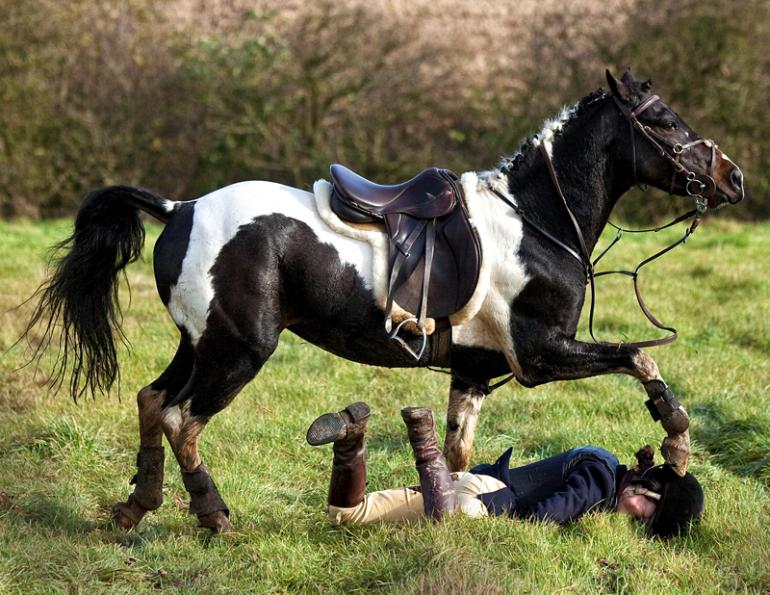
how to stop a horse bucking, my horse won't stop bucking, jonathan field, natural horsemanship, exercises to stop bucking, my horse won't canter

There are many different reasons for a horse to buck. This article will explore the horse’s motives for bucking, tackle some of the issues that might be causing him to behave this way, and offer some insights to help resolve the situation.

tania millen, shannon lee dueck, amanda self, nrha contact rules, dressage FEI contact rules, Federation Equestre Internationale, megan lane caravella, steffen peters

Contact with a horse’s mouth via the bit is a generally accepted principle when riding or driving. But a horse’s mouth is incredibly sensitive and many riders around the world are successfully guiding their steeds without bits. Where did the idea of contact come from, what is it, and do riders really need contact with a horse’s mouth to convince their horse to perform?

jec aristotle ballou dressage exercises dressage stretches english riding stretches equine stretches horse stretching carrot stretches equine physiology horse fitness

Simple Exercises and Routines to Reprogram Dysfunctional Movement - As tempting as it is to use our riding skills and training expertise when teaching a horse to carry his body differently or when rehabbing post-layoff, this actually slows the process down. Somehow, many of us equestrians missed this crucial fact during our educations.

spoiled horses, will clinging, nervous horse, scared horse, difficult horse

With today’s horse world being highly recreational, there are many horses that don’t have to earn a living. These recreational horses are often very well cared for and sometimes even coddled. I will not use the term “spoiled” as I think a spoiled horse is one that has become a serious problem for his owner. I will say, though, that some of these pampered horses are well on their way to developing “pampered horse complex.”

jec a ballou dressage, exercise programs for horses, best way to exercise horse, how to have an effective horse ride

Most of us intend for our daily rides to improve our horse at some level, either by adding to his physical conditioning or progressing his training skills. But whether or not your horse actually makes these gains often comes down to the amount of time you spend on each phase of the ride. The format of your ride determines the outcome of physical improvement.

overheating horse too hot summer riding heat

A hot humid day. One rider. One horse. Both are exercising at a moderate level. Who is more likely to overheat? It might surprise you to learn that your horse gets hotter much faster than you and is more susceptible to the negative effects of heat stress. Prof. Michael Lindinger, an animal and exercise physiologist at the University of Guelph, explains: “It only takes 17 minutes of moderate intensity exercise in hot, humid weather to raise a horse’s temperature to dangerous levels. That’s three to ten times faster than in humans. Horses feel the heat much worse than we do.”

horse won't progress, will clinging horse trainer, training green horse, challenging to train horse

I recently taught a lesson for new clients who described their horse as being “evergreen,” a term that is fitting for many horses that don’t seem to progress. There are obviously many factors to consider when judging a horse’s progress, or lack thereof, including the amount of time spent working the horse, training methods employed, experience and expectations of the rider, confidence of the rider, and too many others to list.

Getting back to work after having time off can be difficult. The holiday is never quite long enough, so it’s nice to be able to ease back into the job. The same is true of horses that have had some time off.

Pages